
Just a few years ago, commercial space travel sounded like science fiction. Now, sustainable space tourism is the debate shaping a booming industry attracting billionaires, engineers, and everyday adventurers eager to catch a glimpse of Earth from above.
But as rockets lift off with increasing frequency, one big question looms larger than the stratosphere: can space tourism ever be truly sustainable?
In 2025, the race to the stars is no longer just about exploration. It’s about accountability. Companies like SpaceX, Blue Origin, and Virgin Galactic are redefining travel while facing increasing scrutiny over their environmental impact, energy use, and ethical responsibilities. The dream of spaceflight may finally be achievable for civilians, but its consequences reach far beyond the launch pad.
The Environmental Cost of Reaching the Stars
Every rocket launch burns massive amounts of fuel, releasing carbon dioxide, water vapor, and soot particles directly into the upper atmosphere, where they linger far longer than ground-level emissions. Black carbon from rocket engines absorbs sunlight, potentially warming the stratosphere and thinning the ozone layer.
Researchers estimate that a single suborbital flight can emit as much carbon per passenger as a commercial jet flying from London to New York, and that’s for a journey lasting only minutes. As the frequency of launches increases, so does the cumulative footprint.
Companies are responding by developing cleaner propellants. SpaceX’s Starship uses liquid methane and oxygen, which burn more efficiently, while Blue Origin’s BE-3 engines use liquid hydrogen, mainly producing water vapor. However, manufacturing and transporting these fuels still generate significant emissions. The challenge lies not only in cleaner combustion but in cleaner production.
See How Climate Innovations Are Powering the Green Economy for a grounded look at technologies cutting emissions.
Innovation at the Edge of Sustainability
Despite criticism, the space tourism industry is also driving innovation. Reusable rocket technology, once considered impossible, is now standard. SpaceX’s reusable boosters and Blue Origin’s New Shepard rockets dramatically reduce waste and cost per flight, cutting the materials and energy needed to reach orbit.
Companies are also exploring carbon offset programs and researching green propellants, including biofuels and synthetic fuels derived from captured CO₂. NASA and private firms are experimenting with life-cycle analyses to measure the actual environmental impact of each launch from start to finish.
Additionally, engineers are designing smaller, lighter spacecraft to reduce fuel consumption and testing electric propulsion systems for future low-orbit transportation. While still in early stages, these efforts point toward a future where space travel may one day align with sustainability goals, though we’re far from that horizon.
For related breakthroughs, explore Inside the Next Frontier of Battery Technology.
Ethical Questions and Cosmic Inequality
The sustainability debate isn’t only environmental; it’s ethical. Critics argue that space tourism currently serves an elite few while contributing to global emissions that affect everyone. Tickets costing hundreds of thousands of dollars highlight the gap between technological achievement and social equity.
Supporters counter that early luxury participation is financing innovation that could eventually benefit all humanity, much like the early days of aviation. If reusable rockets and cleaner fuels become mainstream, the same technologies could advance satellite deployment, scientific research, and even disaster monitoring systems on Earth.
Still, questions persist: Should humanity invest billions to send tourists into orbit when those resources could be used to address urgent problems like climate change or poverty on Earth? The conversation reflects a growing tension between ambition and stewardship, between looking up and looking around.
The Promise of Space for Earth
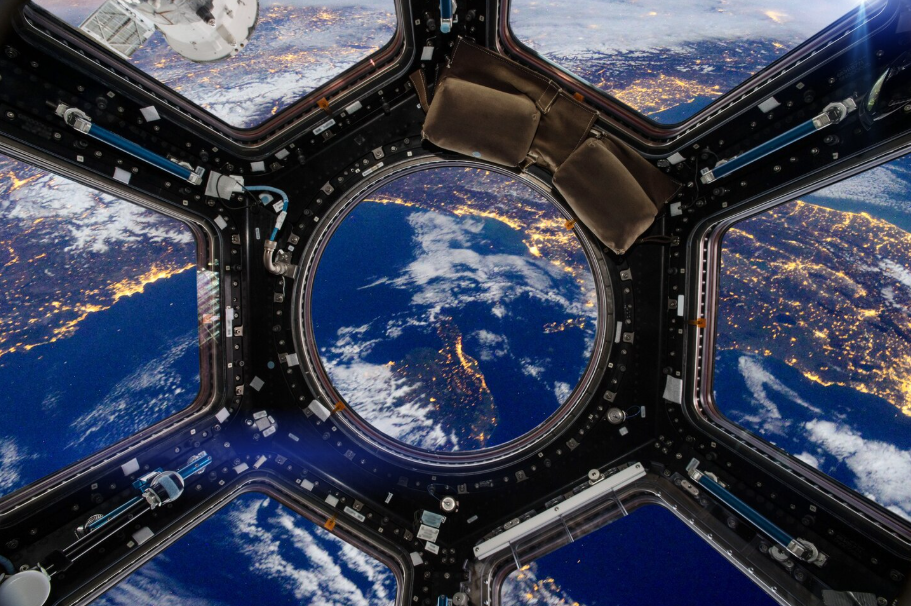
Paradoxically, one of the strongest arguments for the existence of space tourism is environmental awareness itself. Many astronauts describe the “overview effect,” which describes a profound shift in perspective that occurs after seeing Earth as a fragile, blue sphere floating in darkness. Advocates hope that more people experiencing this view will become passionate protectors of the planet.
In fact, several companies now market flights not just as thrill rides but as “eco-awareness journeys.” The challenge is to ensure that inspiration leads to tangible sustainability actions once travelers return.
Curious how travel is evolving elsewhere? Read The Return of Supersonic Passenger Flights
Toward a Responsible Future
The truth is, space tourism is still in its infancy. Making it sustainable will require transparency, innovation, and international collaboration. Stronger regulations, cleaner fuels, and lifecycle emissions tracking will be essential.
Humanity’s desire to explore is unstoppable, but our methods must evolve. The ultimate measure of success won’t be how many people reach space, but how responsibly we do it. If space travel can inspire solutions rather than add problems, it might just earn its place among sustainable frontiers.